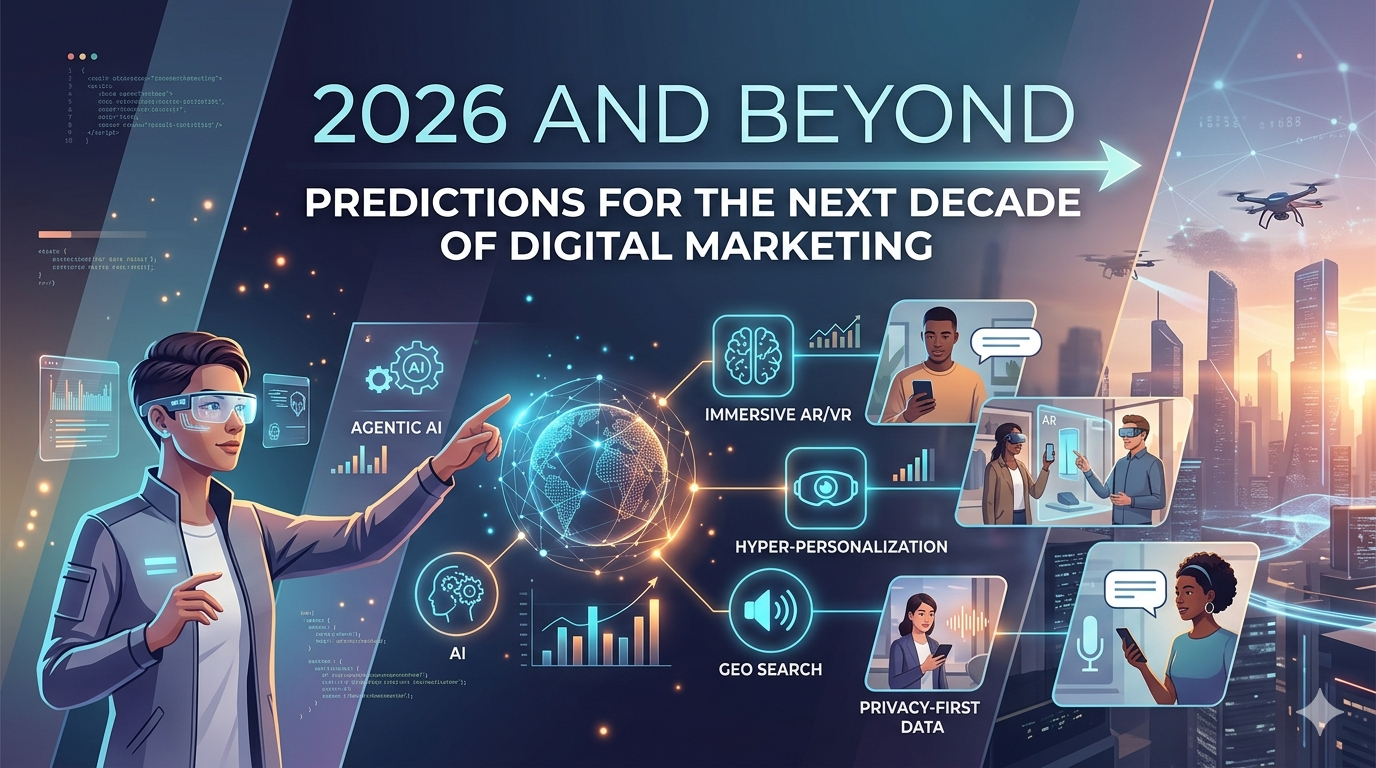
The digital marketing landscape in 2026 looks nothing like it did five years ago and the pace of change is only accelerating. Artificial intelligence has moved from buzzword to business infrastructure. Search engines no longer just rank pages; they synthesise answers. And consumers expect hyperpersonalised experiences at every digital touchpoint.
For businesses and marketers who want to stay ahead, understanding where the industry is heading is not optional. It is a survival skill. This guide lays out the most significant predictions for the next decade of digital marketing, backed by current data and emerging trends that are already reshaping the industry.
| $1T+global digital ad spend projected by 2030 | 80%of customer interactions predicted to be AI-assisted | 50%of searches expected to be voice-based by 2030 |
1. AI Will Power Every Layer of Marketing
Artificial intelligence is no longer a future consideration it is already embedded in ad targeting, content generation, email personalization, and customer service. But the next decade will see AI deepen its role dramatically.
According to McKinsey’s 2025 State of AI report, organizations that have fully integrated AI into their marketing functions report revenue uplifts of 3 to 15% and sales ROI improvements of 10 to 20%. As AI becomes more accessible, the competitive advantage will belong to brands that use it most strategically not just to automate, but to personalize at scale
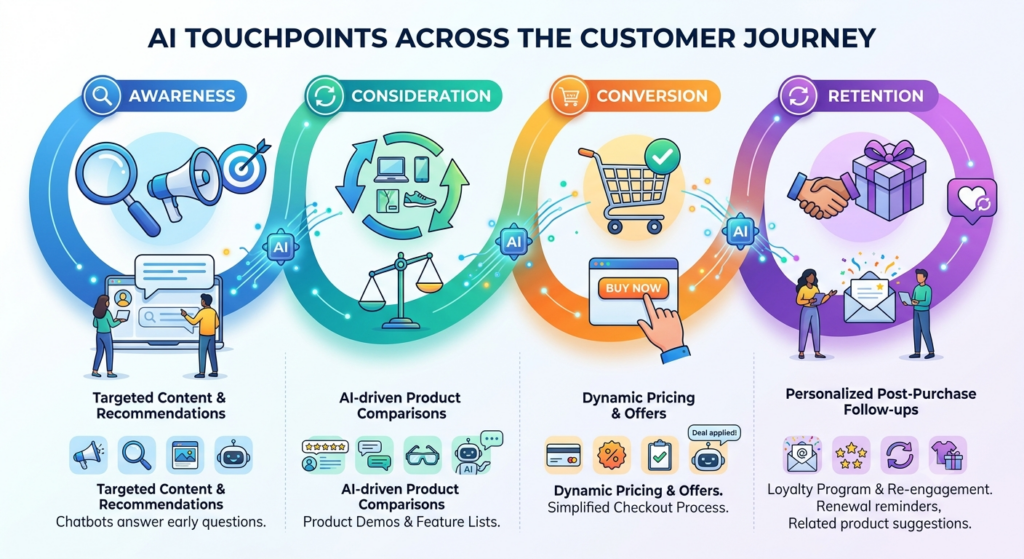
Predictive analytics will allow marketers to anticipate customer needs before they are expressed. Generative AI will produce content, creative assets, and ad copy at speeds impossible for human teams alone. But the brands that win will be those that use AI to amplify human creativity not replace it.
2. Search Is Evolving Into a Conversation
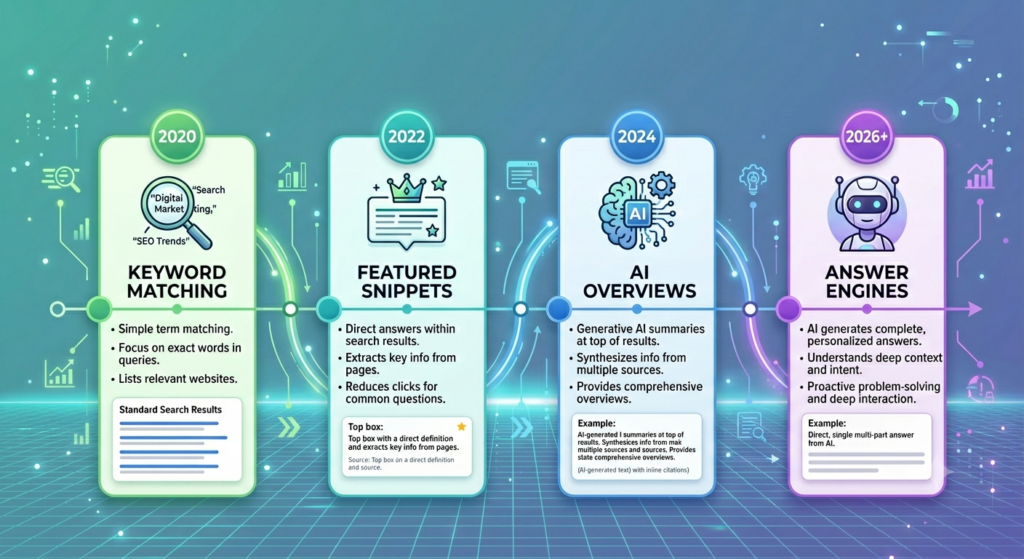
Traditional keyword-based search is giving way to conversational, intent-driven queries. Tools like Google’s AI Overviews, ChatGPT Search, and Perplexity are answering questions directly summarizing information so users never need to click through to a website.
This is both a threat and an opportunity. Brands that structure their content for Answer Engine Optimization (AEO) clear, authoritative, concise answers will be cited by AI systems. Those that don’t will become invisible regardless of their traditional Google ranking.
What This Means for SEO in 2026 and Beyond
• Optimize for questions, not just keywords conversational queries dominate AI search.
• Build topical authority across interlinked content clusters, not isolated pages.
• Implement structured data (FAQ, HowTo, Article schema) so AI can parse and cite your content.
Voice search will amplify this further. Statista projects that voice commerce will exceed $80 billion by 2030, making natural-language content optimization essential for any e commerce strategy.
3. Hyper Personalisation Becomes the Baseline
Consumers in 2026 do not tolerate generic marketing. Mass broadcast messaging is being replaced by one-to-one experiences tailored to individual behaviour, preferences, and intent delivered in real time across every channel.
Research from Salesforce’s State of the Connected Customer shows that 73% of customers expect companies to understand their unique needs and expectations. Brands that fail to deliver personalized experiences see significantly higher churn rates.
“Personalization is no longer a nice-to-have. By 2030, every customer interaction that isn’t individually tailored will feel like a step backward.” — Salesforce, State of the Connected Customer
First-party data strategies built on owned CRM systems, email lists, and loyalty programmes will become the bedrock of marketing in a post-cookie world. Brands that invested early in zero-party data collection (direct customer preferences and declared intent) will have an insurmountable advantage.
4. Short Form Video and Interactive Content Dominate
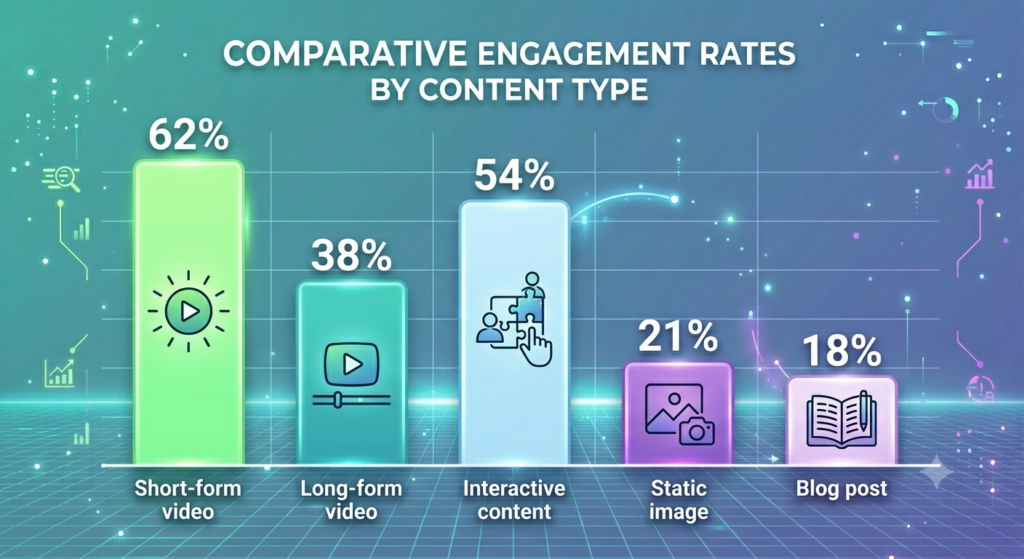
Video already accounts for over 82% of all internet traffic, according to Cisco’s Annual Internet Report. Short-form video driven by platforms like TikTok, Instagram Reels, and YouTube Shorts is now the single most effective format for brand awareness and engagement across every demographic.
The next frontier is interactive content: shoppable videos, AR try-ons, live commerce events, and AI-personalised video feeds that change based on viewer behaviour. Brands that build production capabilities for these formats now will command attention in an increasingly competitive feed.
5. Privacy-First Marketing Reshapes Targeting
The deprecation of third party cookies and the tightening of global data regulations from GDPR to CCPA and beyond have fundamentally changed how marketers can track and target users. The days of cross-site behavioural tracking are over.
The winners of the next decade will be brands that build direct, trust-based relationships with their audiences. Email marketing, SMS, and owned communities will outperform programmatic targeting as first-party data becomes the most valuable asset in any marketer’s toolkit.
• Invest in your own email and SMS lists they are assets you own outright.
• Launch loyalty programmes and content subscriptions to generate zero-party data.
• Contextual advertising placing ads based on page content rather than user tracking is making a major comeback.
6. Purpose-Driven and Sustainable Marketing Gains Ground
Consumers are increasingly aligning their purchasing decisions with their values. According to Nielsen’s Global Sustainability Report, 66% of global consumers and 73% of millennials say they would definitely pay more for a sustainable product or brand.
Brands that authentically embed sustainability and social purpose into their marketing strategy not just as a PR exercise, but as a genuine operating principle will build the deep consumer loyalty that no ad budget can buy.
Key Takeaways: What to Focus on Right Now
• Adopt AI tools for content, personalisation, and analytics but keep humans in the strategy seat.
• Restructure your content for AI search engines: answer first format, schema markup, topical authority.
• Build first-party and zero-party data assets before competitive pressure forces your hand.
• Invest in short-form video and interactive content production capabilities.
• Align your brand with genuine values consumer will reward authenticity and punish performance.
Conclusion
The next decade of digital marketing will reward businesses that move quickly, think strategically, and invest in the right foundations AI literacy, owned data, search authority, and authentic brand values. The tools are changing fast; the principles are not.
Whether you are a startup building your first digital presence or an established brand recalibrating your strategy for the AI era, the time to adapt is now. The brands that thrive in 2030 are making their decisions today.
Need a digital strategy built for the decade ahead? Explore Eximo Digital‘s Digital Marketing Services from SEO and content to AI-powered campaigns and beyond.